
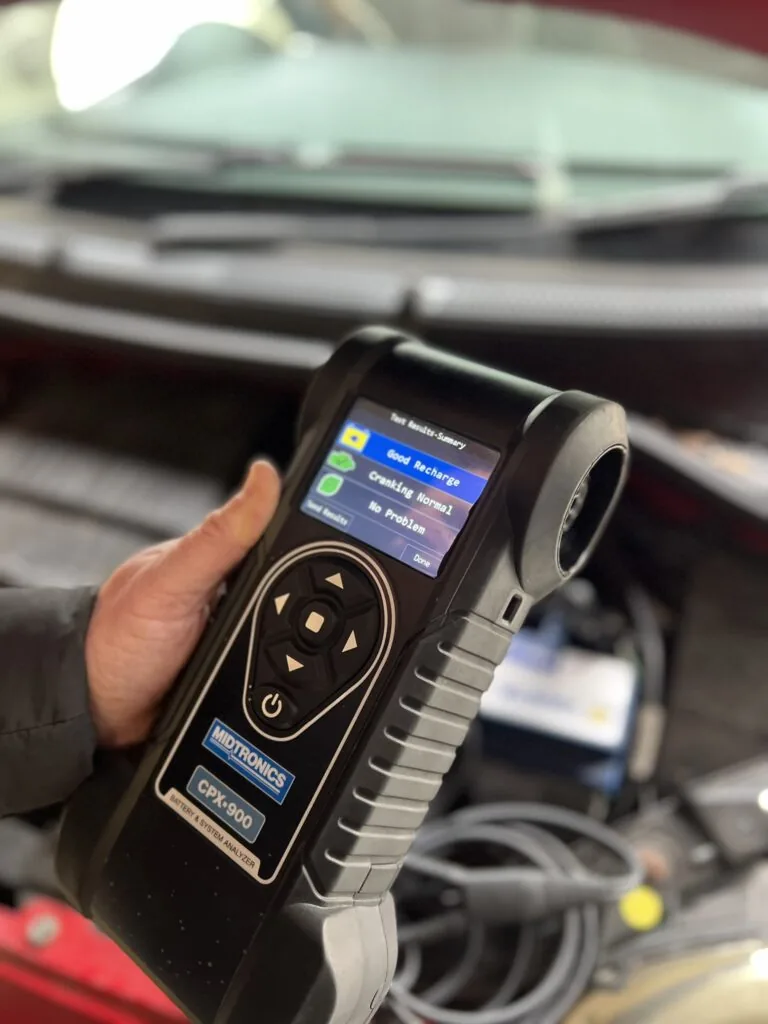
All too often, fleet technicians are forced into rushed reactive repairs when a car, truck or bus won’t start. A quick voltage test usually reveals the battery to be struggling. The old one is removed and a new one quickly installed.
Great. But what if that wasn’t the root problem?
What if there’s something deeper going on in the electrical system?
How do you know the vehicle won’t fail to start yet again, this time when it’s out on the road?
That’s where system testing is so important. A system tester goes well beyond a standard voltmeter, and beyond even a regular battery tester. It can also test your starter system (starter motor) and charging system (alternator and associated systems).
This gives you a much more thorough overview of your vehicle’s overall electrical condition. And if you identify any underlying issues beyond the battery, you have the time and space to fix them now instead of waiting for them to get worse.
What system testing means
System testing is an in-vehicle check of the vehicle’s electrical system. It looks at how the battery performs inside the car or van, as part of the overall system, not just isolated from the rest of the vehicle. That means checking the battery alongside the two most important components, the starter system and the charging system.
In a standard voltmeter test, a low voltage often means a battery is on its last legs. But batteries can also have low voltage because the alternator isn’t charging it properly, the starter motor is placing too much demand on it, or there’s a parasitic drain or another electrical issue.
In-vehicle system testing gives a more accurate picture because it assesses the battery in the context of the full electrical system. From a workshop perspective, only replacing the battery means you risk replacing a symptom without fixing the cause.
In short, system testing helps you distinguish a failed battery from a charging fault, a cranking issue or a wider electrical problem.
What system testing can reveal about the battery
At the start of a system test, the tester first assesses the battery itself. At this point, the tester carries out the same functions as a standard battery tester. Depending on the unit, these may include voltage, conductance, reserve capacity and general battery condition. This gives you a clearer picture of whether the battery is healthy, low on charge, deteriorated or already at the end of its service life.
A battery test can reveal several different issues. For example, it can show that the battery is simply discharged and needs charging before any further testing. It can also show that the battery has deteriorated internally and no longer has the capacity or cranking performance it should.
What system testing can reveal
During a system test, you’ll be prompted to conduct a starter system test. When instructed, simply start the engine. System testers generally measure cranking voltage and cranking time. Technicians then use these readings to understand whether the starting event is normal or whether further investigation is needed.
A starter system test can reveal many different issues. For instance, low cranking voltage points to excessive voltage drop or high demand during start-up. A long cranking time suggests the starter event isn’t healthy on some level, and so on.
After the starter test, and with the engine now running, a system tester conducts a charging system test. During this process, the tester will instruct you to raise and lower the revs (with the vehicle in neutral, of course) and activate or deactivate electrical loads such as the lights and blower fans.
A charging system test can reveal undercharging, which prevents the battery from ever properly recovering. It can also uncover unstable charging behaviour, where the system performance changes with engine speed or load.
What system testing can reveal that a simple tester might miss
A battery tester alone is excellent, in some contexts. However, a battery tester can only tell you if the battery is weak. A system tester tells you why the battery is weak.
That context helps you understand whether a fleet battery is at the end of its life, or whether there’s a deeper problem with the starter or alternator. That cuts repair time, diagnosis costs, future breakdowns and other related costs. It also removes guesswork, repeat visits and unnecessary part replacement. Basically, your fleet workshop benefits from better decisions and less wasted time. Here’s where system testing adds the most value:
Repeat battery complaints
If the same fleet vehicle keeps coming back with battery trouble, system testing helps you check whether the battery is the fault. It can show whether poor charging or abnormal cranking is causing the repeat failure instead.
Battery replacement
Before you fit a new battery, you need confidence that the old one is the true root cause. System testing helps confirm whether replacement is justified or whether another fault is damaging battery performance.
Fast fault separation in busy workshops
When the workshop’s busy, you need a quick route to the right diagnosis. A tester that checks the battery, starter and charging system in one workflow gives you a faster picture of what needs attention next.
Fleet maintenance and uptime
For fleets, avoidable electrical faults create downtime. System testing helps catch charging and starting problems early, before they turn into breakdowns, no-starts or repeated battery replacements.
Which system tester should my fleet use?
The Midtronics CPX-900 ROBIS is our go-to ‘all-rounder’ for many fleets. It’s an advanced system tester. It gives you deeper diagnostic detail than a basic battery tester, including Conductance profiling, reserve capacity testing, cranking health reporting and ROBIS connectivity. It’s great for both 12-volt and 24-volt use across automotive workshops, commercial workshops, emergency services and roadside assistance.
Here at Rotronics, we help fleet organisations take control of their battery issues. With a simple proactive battery maintenance plan, you can significantly reduce non-starts and other electrical failures. For instance, one client saw a 95% reduction in non-starts.
A system tester is a comprehensive way to make sure everything in the vehicle is operating as it should. Get in touch with our experts and we’ll recommend the right equipment for your workflow, budget and processes. We look forward to hearing from you.

