
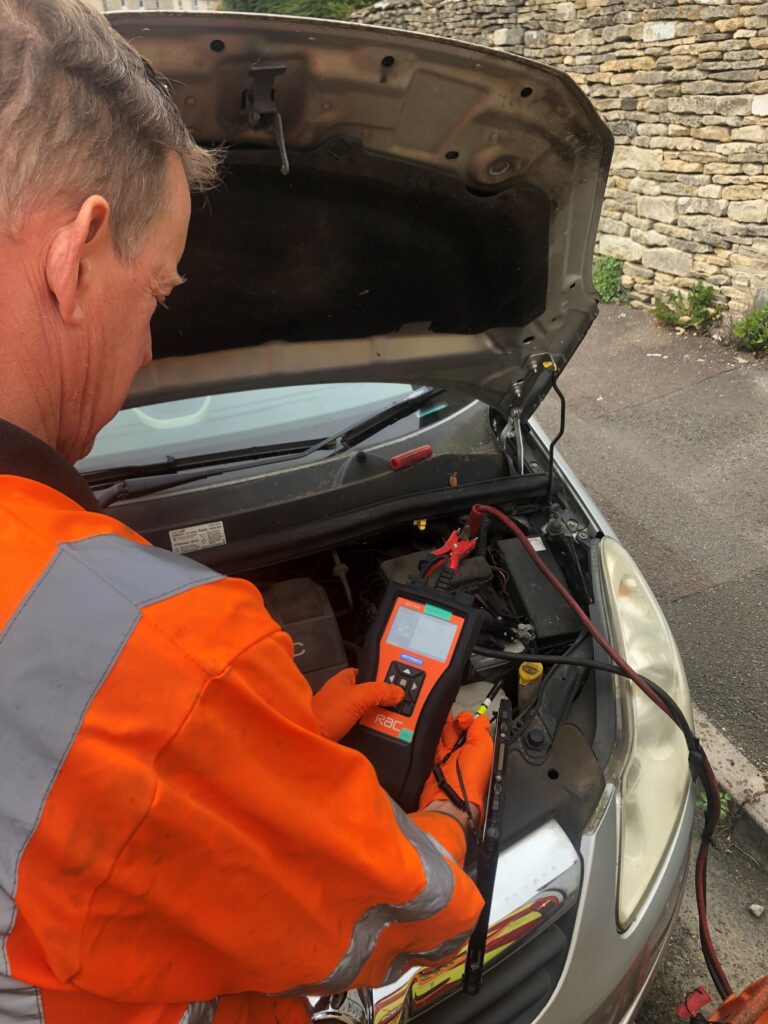
You use your battery tester to decide whether you need to charge, replace or return a battery to service. You need to trust that decision.
Your tester may power up and complete each test without showing an error. However, that doesn’t prove its readings are within the manufacturer’s tolerances.
Calibration checks your tester against known reference values. It confirms whether your unit still produces accurate results. If it doesn’t, it can be adjusted, repaired or replaced.
At Rotronics, we recommend having your tester calibrated once a year. Here’s why…
What does tester calibration involve?
During calibration, an engineer connects your tester to a specialist Midtronics calibration system. The system tests it across specified voltage ranges and CCA bands. The engineer then compares its voltage, conductance and resistance readings with the manufacturer’s tolerances.
The accompanying health check may also involve:
- Inspecting the leads, clamps, cable connections and contact points
- Testing the circuit board and internal components
- Cleaning the contact surfaces
- Updating the firmware (if applicable)
The engineer then completes a final verification test. If the tester’s readings fall within tolerance, you receive a dated calibration certificate. This records that the unit met the manufacturer’s requirements when tested.
If the readings fall outside tolerance, the service team can investigate the cause and explain whether the tester needs adjustment, new cables, another repair or replacement.
Why can a battery tester lose accuracy?
Like any measuring instrument, a battery tester can lose accuracy over time.
Precision resistors and reference circuits can drift as they age. Repeated temperature changes expand and contract the circuit board and soldered joints. Drops and knocks can loosen a cable socket or crack a soldered connection. Dirt and corrosion on the clamps can increase contact resistance. Moisture inside the tester can corrode circuit-board tracks or create unwanted current paths.
Small changes can shift the tester’s voltage, resistance, conductance and reported CCA readings without stopping the test. Because the results still appear plausible, the tester may not show an error message.
Other faults can cross a limit that the tester can detect. For instance, a damaged test lead could trigger a ‘Check connection’ message because excessive or unstable resistance prevents the tester from receiving a valid signal.
Replacing the cable may clear the message, but it only fixes the detected connection fault. It doesn’t verify the accuracy of the tester’s internal measurement circuits. You should still keep to the unit’s annual calibration schedule, even if it now completes tests without an error.
What happens if you don’t calibrate your tester?
An overdue calibration doesn’t necessarily mean that your tester is inaccurate. However, it means you no longer have current evidence that its readings remain within tolerance. The tester could be producing false passes or false fails. You need to have it calibrated to verify its accuracy:
- A false fail may cause you to replace a serviceable battery. That increases battery costs and waste. It may also make it harder to support a warranty claim with reliable test data.
- A false pass could mean you return a weak battery to service. The vehicle may then suffer another non-start. That means downtime, recovery costs and a possible angry customer.
Inaccurate results can also damage your records. If you track battery performance across a fleet, you need consistent data. Tester drift makes it harder to compare results across vehicles, batteries and test dates.
Your technicians may also lose confidence in the equipment. They may repeat tests, use another tester or replace batteries based on judgement rather than data. This wastes workshop time.
Does calibration support warranty claims and quality records?
A dated calibration certificate records that the tester met the required tolerances when it was calibrated. This may help you support your battery warranty claims. It can also provide evidence for an audit, an OEM process or your own quality-control system.
Some vehicle manufacturers and dealer networks require annual calibration for approved workshop testers. Follow any specific requirements that apply to your equipment and your site.
Of course, calibration doesn’t guarantee that every claim will be accepted. However, it helps show that you used verified equipment to reach your test decision.
Clean your clamps between calibrations
Clean the clamps and contact surfaces as part of your routine tester maintenance. Dirt and corrosion can increase resistance, weaken the connection and cause inconsistent results.
Inspect the test leads at the same time. Replace the cable set if you find damaged insulation, loose connections, worn conductors or clamps that no longer securely grip the terminals.
If the results look unusual, clean and reconnect the clamps before testing again. This may solve a connection problem. However, it won’t confirm that the tester’s internal measurement circuits remain accurate. You should still have the tester calibrated each year.
When should you calibrate your tester?
Book your tester in for calibration every 12 months. Mark the due date on the tester or add it to your workshop maintenance schedule.
Ask our service team whether your tester needs checking before its next due date if:
- You’ve dropped or damaged the tester
- You continue to receive inconsistent results after cleaning the clamps and checking the leads
- You receive inconsistent results
- The readings differ unexpectedly from a calibrated tester used under the same test conditions
- The unit has undergone a repair that could affect its measurement accuracy
At Rotronics, we calibrate and verify Midtronics battery testers at our service centre. We’ll inspect your equipment, confirm whether it meets the required tolerances and provide a dated certificate.
Contact our team to arrange your annual calibration.

