
In the workshop, you can give a battery the time it needs to recharge. On the road, short trips and the vehicle’s charging controls can limit those opportunities. Repeated restarts and equipment running from the battery while the engine’s off use stored energy. Electrical faults can add to the drain.
At Rotronics, we recommend checking recharging performance alongside starting performance. Here’s where dynamic charge acceptance, or DCA, fits into your fleet’s battery maintenance.
What does dynamic charge acceptance mean?
Dynamic charge acceptance, or DCA, describes a battery’s ability to accept short bursts of high charging current while it’s partly charged.
These bursts can occur when a vehicle recovers energy during deceleration or recharges between start-stop events.
If the battery can’t accept enough charge during those opportunities, its charge level falls over the working day.
Why does DCA matter in fleet vehicles?
A delivery van making repeated stops may have limited time to recharge between engine starts. If it also uses start-stop, the battery supports electrical equipment during stops in traffic and then supplies the next restart.
Some smart-charging systems limit alternator operation to save fuel. Where a vehicle recovers energy during braking or deceleration, the battery also needs to take advantage of those brief charging opportunities.
A battery with poor DCA will struggle to keep up, even when the charging system works. As its charge level falls, start-stop might no longer activate, and the driver could eventually face a non-start and a breakdown call-out.
You’re then arranging recovery, finding workshop time and getting the delivery route covered – all on top of your usual schedule.
Is a cranking test enough to check battery health?
A cranking test assesses whether the battery can deliver the burst of current needed to start the engine. Reserve capacity testing assesses its ability to support electrical loads over time. Charge acceptance testing assesses how well it can recharge.
A battery can pass a cranking test but still struggle to recharge during use. Checking all three gives you a fuller picture of whether it can cope with the vehicle’s demands.
What affects a battery’s charge acceptance?
Charge acceptance depends on battery type, temperature, charge level and previous use.
For example, a cold battery may accept less charging current. A battery will also normally accept less current as it approaches full charge. Neither of these, on its own, proves the battery’s faulty.
However, battery deterioration can also affect charge acceptance. Spending long periods discharged or partly discharged encourages sulphation. Lead sulphate deposits build up on the plates and can make recharging harder.
In flooded batteries, the acid can also separate into layers. This is called acid stratification, and it too can reduce charge acceptance.
Follow the tester’s prompts, selecting or confirming the battery type and entering any battery data requested. This helps ensure it uses the correct test procedure.
How do you test dynamic charge acceptance?
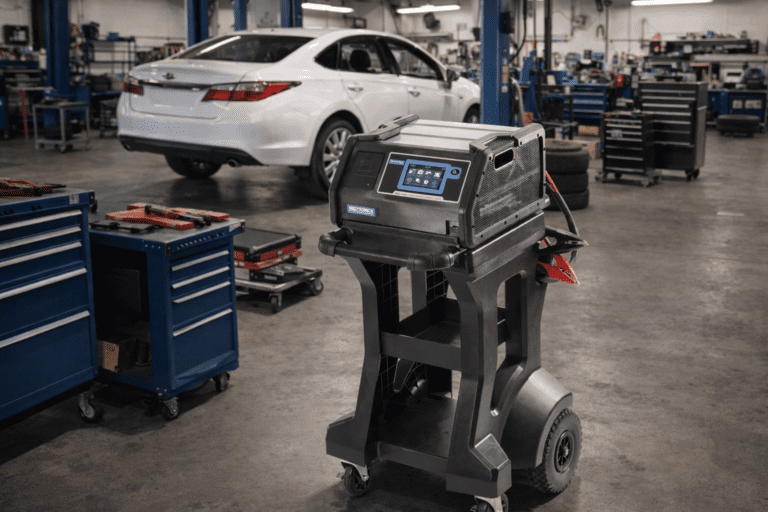
Midtronics also uses the name Dynamic Charge Acceptance for its testing technology. The DCA-8000P applies a load to simulate an engine start, then monitors how the battery accepts charge.
Its wider testing process also assesses cranking performance and the battery’s ability to supply power over time. Further diagnostics, including load and recovery checks, can follow where required.
The DCA-8000P provides most initial diagnostic decisions in two minutes or less. Cold or deeply discharged batteries can need longer. That’s the diagnostic time; completing any required recharge will take longer.
What should you do with your battery test results?
If the tester calls for charging and retesting, follow that process before making a replacement decision. A discharged battery may still be serviceable.
If it reports poor charge acceptance, follow the diagnostic instructions to establish what maintenance or replacement is needed.
You’ll also need to investigate why the battery became discharged. Short journeys, equipment left running or a charging fault still need attention, even after you fit a replacement. That might mean charging vehicles at the depot, adding checks for equipment left on after a shift or repairing the charging system.
Save the results in the vehicle’s maintenance record. If the fault returns, you’ll have earlier readings to compare with the next test.
Bring us the battery fault that keeps coming back
Tell our team about the vehicle that keeps returning with a battery fault. Include what the driver reports, how the vehicle’s used, which battery is fitted, whether it’s been replaced and your test results.
At Rotronics, we work with fleet operators, dealerships and workshops on battery management. We supply testing equipment, provide hands-on workshop training and support your equipment through our service and repair centre.
We’ll help you work out what your current checks cover and where you need more information. Reach us by calling 01453 621 244 or emailing info@rotronicsbms.com.

