
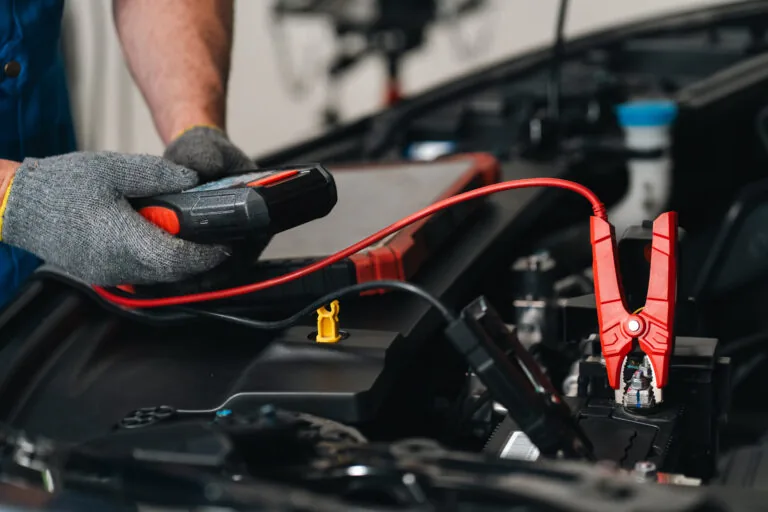
You connect your battery tester and start the battery test. It all seems to be going okay. But then, instead of the usual result, the screen displays a strange message: ‘System noise’.
System noise doesn’t mean the battery has failed or that there’s something loud nearby. It means electrical activity is interfering with the test. Because of that interference, the tester can’t get a stable enough measurement to make an accurate decision. The interference must stop before the tester can complete an accurate test.
Here at Rotronics, we help fleets, fast-fit centres and specialist workshops identify battery problems across automotive, marine, powersport and small-engine applications. On this page, we’ll explain everything you need to know about system noise during a battery test.
What does system noise mean?
A battery tester measures how the battery responds to a controlled test signal. It uses this response to assess the battery’s condition, state of charge and available starting capacity. For this to work, the electrical conditions at the battery terminals must be stable.
The ‘noise’ isn’t a sound. It’s electrical interference within the vehicle or around the test equipment.
If an ECU, light, motor, stereo or other component draws current during the test, the tester may struggle to separate that activity from the battery’s response. It may then pause or stop the test and display a system noise message.
Battery testers including the Midtronics CPX-900 ROBIS return a ‘System Noise’ message. Others, such as the DCA-8000P, return ‘No Test’ when they experience system noise.
What causes system noise?
Common causes of system noise during a battery test include:
- The ignition is on.
- The engine is running.
- The radio or infotainment system is active.
- The lights, heater blower or air conditioning are on.
- A door or the boot is open, keeping interior lights or control modules active.
- A battery charger or support unit is still connected.
- There’s an excessive or fluctuating parasitic draw on the battery.
Also, modern vehicles don’t always shut down as soon as you switch off the ignition. Control modules may continue exchanging data or running checks for several minutes. Opening a door, unlocking the vehicle or bringing a key close to it can wake some systems again.
You may also see a system noise message if a charger, arc welder or other high-current device is operating nearby. These devices use or control large electrical currents. Rapid changes in that current can create electromagnetic interference. If the equipment or its cables are close to your tester leads, this electromagnetic interference can induce unwanted signals in them. The tester may then struggle to separate the interference from the battery’s response.
If you suspect interference, switch off the equipment or move further away before retesting.
How do you clear a system noise message?
So, you’ve started a battery test and now you have a ‘system noise’ message. No problem.
First, switch off the ignition, lights, radio, blower motor and other electrical consumers. Remove the key from the ignition. If the vehicle uses keyless entry, follow the manufacturer’s procedure for allowing the systems to shut down. It may be beneficial to take the key into an office or place it in a Faraday pouch.
Close the doors and the boot. Switch off any interior or under-bonnet lights that haven’t switched off.
Disconnect any charger, booster pack or power supply unless the test procedure states that you need it. Never run a normal battery test with the engine running. A starting and charging system test may ask you to start the engine later, but the engine should be off during the initial battery test.
You may then need to wait for the vehicle’s control modules to enter sleep mode. The shutdown time varies between vehicles. Avoid operating the locks, doors or any other controls while you wait, and keep the key far enough away from the car that it doesn’t detect it.
Some testers will automatically continue the test when the electrical activity (‘system noise’) stops. Others will ask you to start again.
What if the message keeps returning?
If the battery has a low state of charge, charge it. Use the correct charging equipment and procedure. When you’ve finished, disconnect the charger and allow the battery to settle before testing it again.
You could also isolate the battery from the vehicle and perform an out-of-vehicle test, which isolates the battery from vehicle loads and control module activity. Follow the vehicle manufacturer’s battery disconnection procedure, because disconnecting a battery can erase stored settings and trigger a battery management system reset or relearn procedure.
If the battery tests correctly once isolated, the vehicle’s electrical system likely caused the interference. If you still can’t complete the test, check the tester instructions and inspect the battery and test connections before continuing.
Is system noise a battery result?
No. Treat system noise as an interrupted test, not a pass or fail.
Basically, if you see ‘System Noise’ or ‘No Test’ on the tester, there’s no need to replace the battery. You need to identify the source of electrical interference. Sometimes, that’s simple. Other times, it requires some in-depth diagnosis work.
Remove the interference and ensure the tester returns a valid test first. You need a confirmed result such as Good Battery, Good–Recharge, Charge and Retest or Replace Battery before deciding what to do next.
Can newer testers work through system noise?
Yes, some can. As technology continues to improve, some newer testers are better equipped to ‘filter out’ some electrical interference than others.
For example, the Midtronics MVT-200 uses algorithms designed to reduce system noise interruptions. This doesn’t remove the need to follow the standard test preparation and procedures, of course. You should still switch off loads and let the vehicle settle. However, better system noise management can reduce repeat tests and save workshop time.
If system noise keeps interrupting your battery tests, Rotronics can help you choose the right tester and improve your testing process. As the UK’s sole Midtronics supplier, we also provide training, technical support, calibration and repairs.
Contact our team to discuss your battery testing requirements, whether you operate a fleet, fast-fit centre, dealership or independent workshop.

